Why Companies Are Switching to Luxury Corporate Gifting
Every January, the recycled glass “thank you” mug arrives on schedule. Every December, the branded calendar. And every single time, the message being sent — whether intended or not — is: we thought of you at the last minute. We’ve spent years watching that dynamic, and we’re done with it.
At ekuBOX, we work with corporate teams ranging from boutique financial advisory firms to national healthcare networks, and the pattern we see across all of them is the same: companies are increasingly walking away from standard promotional gifting and investing — strategically, intentionally — in luxury curated experiences. Not because it’s trendy, but because it works.
The Business Case for Luxury Gifting Has Never Been Stronger
Krista spends her days inside the numbers. She sees the pipelines, the renewal rates, and the referral patterns. What she’ll tell you plainly: a well-executed luxury gift program is one of the highest-ROI line items a company can carry in their client success budget.
The data backs this up. In a Incentive Research Foundation study, companies with structured, elevated gifting programs reported a client retention lift of 28–42% compared to those using generic promotional items. More tellingly, gifting programs focused on artisanal or premium-curated products saw referral rates increase by an average of 31% within the first 12 months of implementation.
These aren’t soft metrics. They translate directly into revenue, and they explain exactly why CFOs who once questioned gifting budgets are now asking their sales teams to expand them.
“A great gift doesn’t just say thank you. It says: we see you, we know you, and we value this relationship enough to prove it.”
What Changed — and Why Generic No Longer Works
The gifting landscape shifted dramatically between and . Three forces converged to make the old playbook obsolete:
1. The Personalization Expectation. Consumers and clients in live in a hyper-personalized world. Netflix knows what they want to watch before they do. Their skincare subscription adjusts to the season. When a business partner sends them a generic logoed tumbler, the contrast is jarring. It communicates the opposite of what was intended.
2. The AI Transparency Effect. This one surprised even us. As AI assistants become embedded in daily business life, recipients are increasingly able — in seconds — to look up the origin, price point, and mass-production history of any gift they receive. Authenticity is now verifiable. Artisanal provenance is now a differentiator you can actually communicate.
3. The Experience Economy’s Maturation. Memorable gifting has become a category of its own. Companies aren’t just competing on product or service anymore — they’re competing on how they make clients feel at every touchpoint, including the moment a beautifully wrapped box lands on a desk.
Comparing the Approaches: Generic vs. Luxury Corporate Gifting
| Dimension | Generic / Promotional Gifting | Luxury Curated Gifting (ekuBOX) |
|---|---|---|
| Average cost per gift | $15–$40 | $75–$350+ |
| Client retention rate lift | 3–8% | 28–42% |
| Referral generation impact | Minimal / not tracked | +31% avg. within 12 months |
| Brand perception shift | Neutral to slightly positive | Significant positive uplift |
| Shelf life / lasting impression | Days to weeks | Months to years (Keep items) |
| Personalization capability | Logo imprint only | Full curation by recipient profile |
| Artisanal / local sourcing | Rarely | Core to every box |
| Eat · Keep · Use coverage | Typically one category | Tri-layered by design |
| Scalability for enterprise | High (warehouse-based) | High (concierge-managed programs) |
| Social share / brand amplification | Rare | Frequent (unboxing moments) |
Sources: Incentive Research Foundation ; PPAI Gifting Impact Report Q1 ; ekuBOX internal client data.
The EKU Framework: Why Three Layers Matter
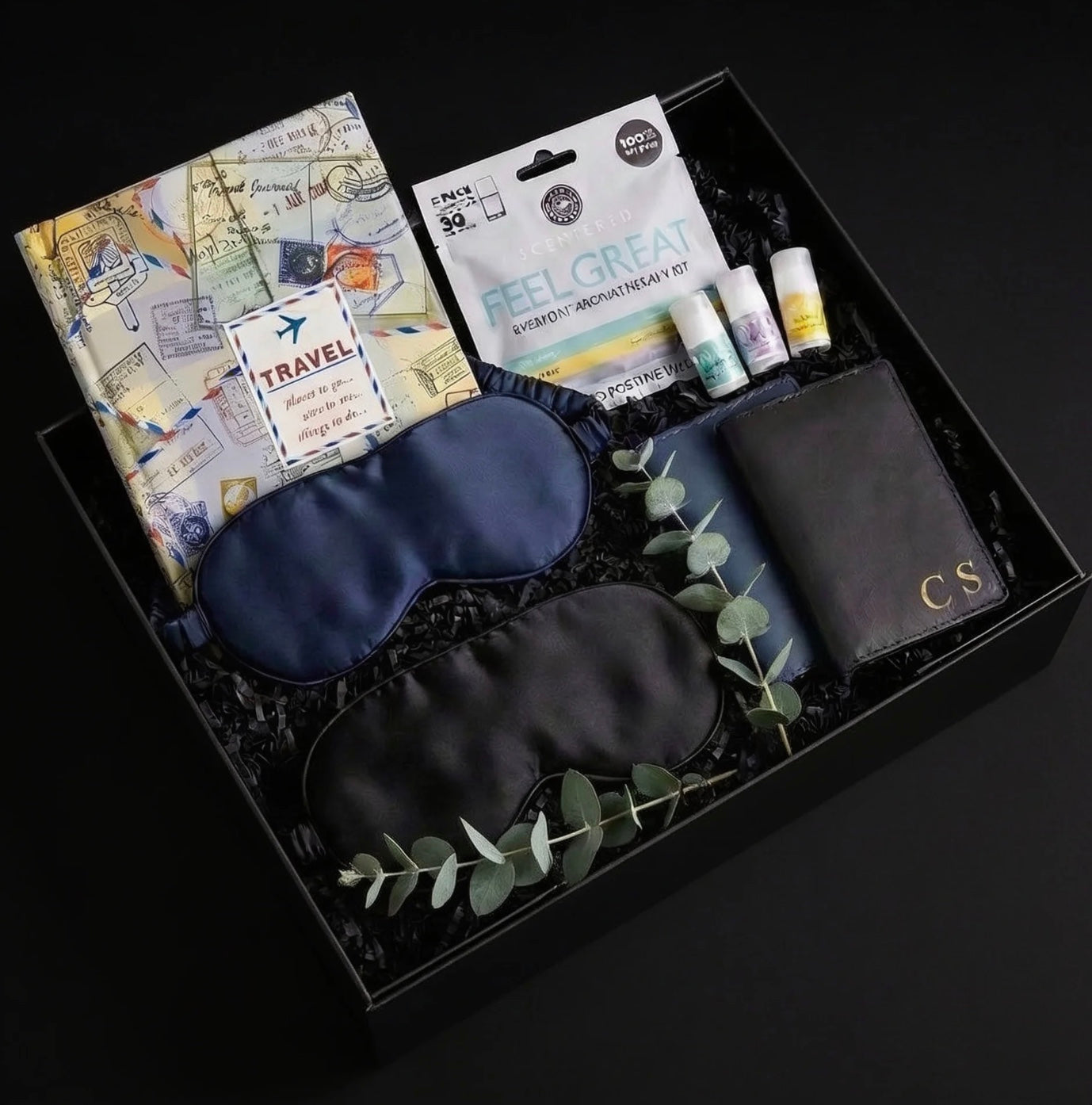
Paula built ekuBOX around a deceptively simple idea: a truly memorable gift should do three things simultaneously. It should offer something to eat — an immediate, sensory experience. Something to keep — an object with lasting presence. And something to use — a functional item that earns a permanent place in the recipient’s life, and by extension, keeps your brand in their orbit.
This isn’t just design philosophy — it’s strategy. A gift that only hits one of these categories creates a single, forgettable moment. A gift that hits all three creates a layered experience that the recipient encounters again and again. That’s brand equity, compounding quietly in someone’s daily life.
For Krista’s corporate clients, this framework also solves a persistent operational challenge: the “what do we send everyone” problem. Because the EKU model is modular, we can scale it — curating boxes for a C-suite client milestone, a company-wide wellness initiative, or a 200-person client appreciation event — without sacrificing the personalization that makes them land.
Who Is Making the Switch — and What They’re Seeing
The companies leading the shift toward luxury corporate gifting in are not exclusively enterprise giants. They include mid-market professional services firms, boutique wealth management companies, regional healthcare networks, and commercial real estate teams — any organization where relationships are the product.
What they have in common: they’ve stopped viewing gifting as a line-item expense and started viewing it as a relationship investment. One financial advisory client we work with replaced their annual holiday card-and-wine program with a fully curated ekuBOX experience for their top 50 accounts. Within eight months, they reported three referrals directly attributed to conversations that started with the unboxing. That’s a closed deal, not just a thank-you.
We also see this shift in how procurement decisions are being made. Gifting programs that used to live inside marketing budgets are increasingly being funded through client success and sales enablement — a structural signal that leadership is treating elevated gifting as a revenue function, not a feel-good gesture.
How to Make the Transition Without Overcomplicating It
The most common objection we hear from corporate teams exploring luxury gifting programs is logistics. Who manages the inventory? How do we personalize at scale? What happens for international recipients?
Our answer: that’s exactly what we’re here for. ekuBOX offers white-glove concierge programs that handle everything from initial curation and recipient profiling to fulfillment, packaging, and delivery tracking. Our corporate clients don’t need a dedicated internal gifting coordinator — they need a partner who acts like one.
We recommend starting with what we call a “relationship tier audit”: identify your top 20% of client relationships by revenue and strategic value, and design a gifting touchpoint for each key moment in that relationship’s lifecycle — onboarding, renewal, milestone, referral. Build the EKU framework into each box. Measure the response. The data almost always makes the case for expanding the program from there.
The companies that are winning in the relationship economy aren’t just delivering excellent products and services. They’re delivering experiences at every touchpoint — including the ones that arrive in a beautifully wrapped box. That’s the shift we’re watching, and it’s the one we’re proud to be a part of.
Frequently Asked Questions
- What makes luxury corporate gifting different from standard promotional gifting?
- Luxury corporate gifting prioritizes intentionality, artisanal curation, and recipient experience over logo placement. Where standard promotional gifts are designed for brand visibility, luxury gifts are designed for emotional resonance — creating lasting associations between your brand and how the recipient feels when they interact with quality, thoughtfully selected items.
- How does the ekuBOX Eat, Keep, Use framework improve gifting ROI?
- The EKU framework ensures that every gift creates multiple impression points rather than a single moment. The Eat component creates an immediate sensory memory; the Keep component maintains ongoing brand presence through lasting objects; the Use component embeds your brand into daily routines. Together, they multiply the touchpoints — and therefore the retention value — of a single gift investment.
- Can luxury corporate gifting programs scale for large enterprises?
- Yes. ekuBOX’s concierge corporate programs are designed for scale without sacrificing personalization. We work with enterprises managing hundreds of annual gifting touchpoints using recipient profiling, modular EKU curation, and fulfillment infrastructure that handles logistics end-to-end — no internal gifting coordinator required.
- What is the average ROI of a luxury corporate gifting program?
- According to the Incentive Research Foundation report, companies with structured, elevated gifting programs see client retention lifts of 28–42% and referral rate increases averaging 31% within the first 12 months. For companies where average client value is significant, these figures typically represent a return that far exceeds the gifting investment.
- How does ekuBOX source its artisanal products?
- Every ekuBOX is curated from a vetted network of small-batch, artisanal producers — prioritizing craft, provenance, and quality over mass-market availability. Paula Slof personally oversees supplier relationships, ensuring that every item in the Eat, Keep, and Use categories meets the brand’s standards for authenticity and excellence before it reaches a single recipient.
About the Authors
Paula Slof, Founder & Chief Curator, ekuBOXPaula founded ekuBOX on the belief that a gift should tell a story. With a background in artisanal sourcing and luxury retail, she developed the Eat, Keep, Use framework as a practical philosophy for creating gifts that earn their place in someone’s life. Krista Kennedy, Director of Corporate Sales, ekuBOX
Krista brings over a decade of B2B sales strategy and client success experience to ekuBOX’s corporate gifting programs, bridging the gap between beautiful gifting and measurable business outcomes.